 |
 |
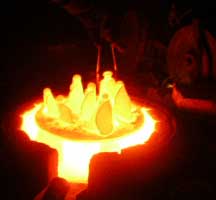
Raku Raku pottery started in Japan during the 16th century with tea bowls made by an artisan named Chojiro for the tea ceremony. Since coming over to the west in the early 20th century, raku has evolved into a popular art form. The Process of making raku pottery starts with a lump of clay that is formed into a shape and dried. It is fired to bisque, that means heated in an electric kiln to about 950 degrees Celsius. When cooled, the pieces are decorated with glaze and put in a propane heated outdoor kiln. We use one made out of recycled oil drums and fire brick. These pieces are heated up once again to melt the glazes. When they are red-hot, they are moved from the kiln to a bucket lined with sawdust and leaves and covered to smother the flames. After a while, when the pieces are cool enough to handle, the soot is cleaned off, revealing its beautiful and surprising coppery, green and blue surfaces. Each piece is individually shaped and fired, making each one unique. All sizes given are approximate, since each piece is individual, there are slight variations in shapes & sizes. Because of the nature of Raku, it is not intended for use with food or liquids. Commissions available upon request.
|

 |